BIOGRAPHIE

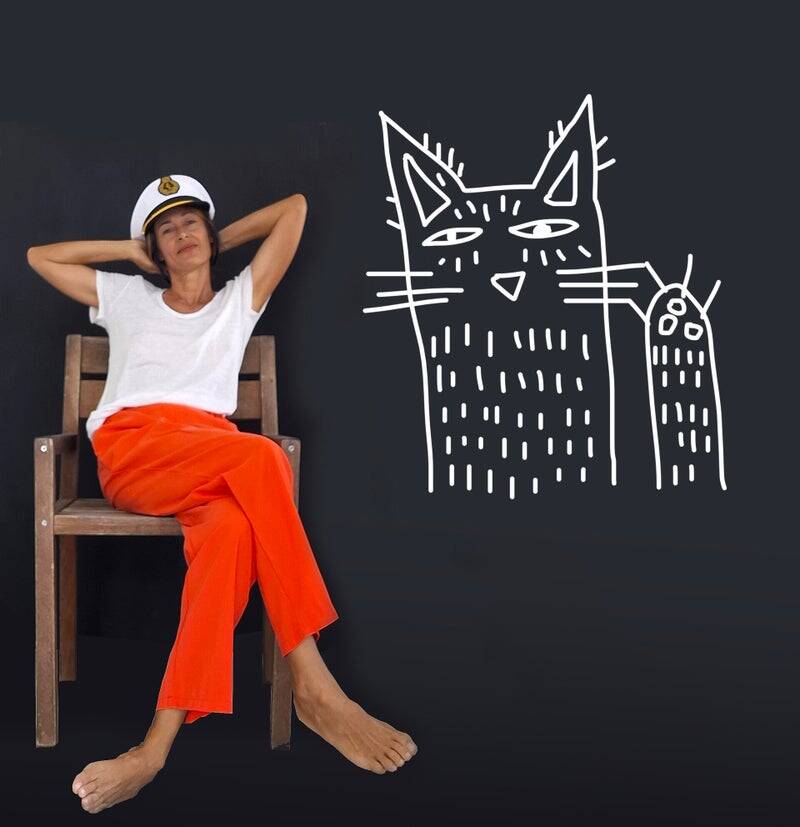
Portée par le voyage comme expérience fondatrice — à la fois école de vie et territoire d’expérimentation — Céline Chat développe très tôt une pratique artistique ancrée dans le mouvement, la liberté et la culture visuelle liée au surf.

Dès les années 2000, son travail circule entre la France, les États-Unis, le Brésil et les Antilles, avec des expositions dans des lieux emblématiques tels que l’International Surfing Museum de Huntington Beach (Californie), le festival AlmaSurf au Brésil, ou encore le MIACS à Biarritz. Elle est également invitée dans des galeries reconnues comme SpaceJunk à Grenoble, ou présentée dans des événements mêlant art contemporain et culture surf, un territoire hybride qu’elle contribue à faire émerger.

Son parcours se structure progressivement autour d’expositions personnelles en France — de Saint-Tropez à Hyères, du Var à la côte landaise — avec des projets tels que Surfing St Tropez (2013), A Ticket for Freedom (2014), Vive le Sud (2015), ou encore Born to be Free et Biarritz Love en 2016. En 2012, l’exposition Céline Chat wants to be Free! à la Fondation Carzou marque une étape importante, affirmant une décennie de création nourrie par ses déplacements à travers le monde.

Parallèlement à la peinture, elle investit très tôt d’autres supports. En 2009, avec le projet Les sirènes d’alarmes, elle intervient sur une épave qu’elle transforme par le dessin et la couleur, inscrivant son travail dans une dimension environnementale et contextuelle. En 2012, elle prolonge cette recherche dans le volume avec LIVE LARGE, sa première sculpture (mousse polystyrène, résine et acier, 300 × 120 × 250 cm), affirmant un passage du plan à l’espace, où la matière devient corps.

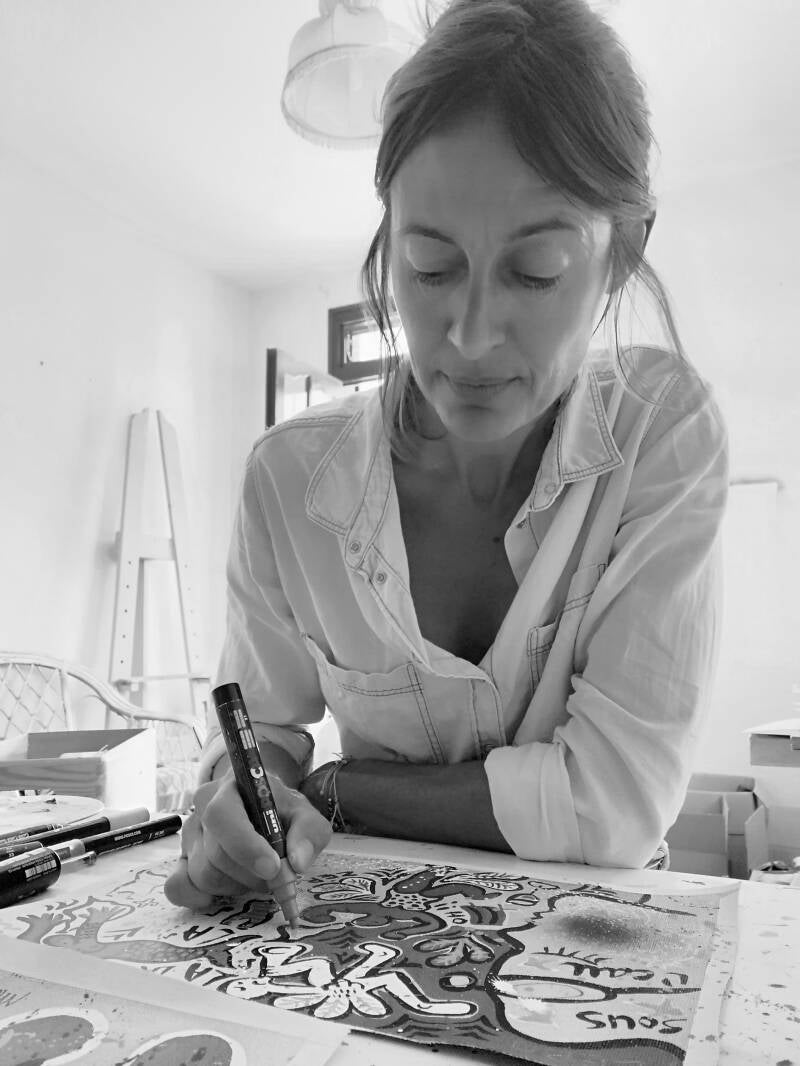
Installée aujourd’hui en Guadeloupe, Céline Chat développe une œuvre picturale où territoires, mémoires et cultures visuelles s’entrelacent en couches successives. Nourrie par ses voyages et les lieux qu’elle a habités — entre Méditerranée, Caraïbes et ailleurs — sa pratique en techniques mixtes construit des surfaces stratifiées où le geste instinctif dialogue avec une composition maîtrisée.

Son travail ne cherche pas à représenter un paysage : il en capte les résonances. Formes, symboles, signes et fragments issus de l’imaginaire collectif deviennent des présences mouvantes. Ils apparaissent, se transforment, s’effacent, dans une dynamique d’apparition et de disparition.

Elle développe ainsi un langage singulier et identifiable : un trait noir affirmé, presque calligraphique, qui structure l’espace ; des champs chromatiques lumineux — roses vibrants, bleus profonds, verts organiques — ponctués de zones de respiration et de blancs actifs.

Sa peinture explore une tension fertile entre figuration libre et abstraction, entre spontanéité et construction, entre mémoire intime et langage universel. Ses œuvres, souvent pensées en séries, fonctionnent comme des cartographies sensibles d’expériences vécues, où se déposent sensations, impressions et fragments d’atmosphères.

Son travail s’inscrit en filiation libre avec certaines figures majeures de l’histoire de l’art moderne et contemporain — de Henri Matisse à Pablo Picasso, de Jean-Michel Basquiat à Niki de Saint Phalle, jusqu’aux approches plus processuelles de Jackson Pollock et Claude Viallat. Plus qu’une référence, il s’agit d’un déplacement : la couleur y devient structure, le geste engage le corps, et le signe s’émancipe de toute fonction descriptive.

À l’intersection de ces tensions, Céline Chat construit aujourd’hui un corpus cohérent, destiné à des collectionneurs sensibles à une peinture vivante, incarnée et contemporaine — une peinture non descriptive mais évocatrice, où circulent lumière, souvenirs et liberté.


Driven by travel as a formative experience—both a way of life and a field of experimentation—Céline Chat developed early on an artistic practice rooted in movement, freedom, and surf-related visual culture.

From the early 2000s, her work has circulated between France, the United States, Brazil, and the Caribbean, with exhibitions in emblematic venues such as the International Surfing Museum in Huntington Beach (California), the AlmaSurf Festival in Brazil, and MIACS in Biarritz. She has also exhibited in established galleries such as SpaceJunk (Grenoble), within contexts that bridge contemporary art and surf culture—an intersection she actively helped shape.

Her trajectory gradually took form through a series of solo exhibitions across southern France—from Saint-Tropez to Hyères, and along the Atlantic coast—with projects such as Surfing St Tropez (2013), A Ticket for Freedom (2014), Vive le Sud (2015), and Born to be Free and Biarritz Love (2016). In 2012, Céline Chat Wants to be Free! at the Fondation Carzou marked a significant milestone, reflecting a decade of creation nourished by global travels.

Alongside painting, she has explored alternative formats from an early stage. In 2009, with Les sirènes d’alarmes, she intervened on a wreck, transforming it through drawing and color, introducing an environmental and site-specific dimension to her work. In 2012, she extended this exploration into three dimensions with LIVE LARGE, her first sculptural piece (polystyrene foam, resin, and steel, 300 × 120 × 250 cm), marking a shift from surface to physical presence, where material becomes body.

Now based in Guadeloupe, Céline Chat develops a painterly practice in which territories, memories, and visual cultures intertwine in successive layers. Nourished by the places she has lived and traveled through—between the Mediterranean, the Caribbean, and beyond—her mixed-media approach builds stratified surfaces where instinctive gesture engages with controlled composition.

Her work does not aim to depict a specific landscape; rather, it captures its resonances. Forms, symbols, vegetal signs, and fragments drawn from the collective imagination emerge as shifting presences. They appear, transform, and dissolve, within a continuous dynamic of emergence and disappearance.

She has developed a singular and recognizable visual language: a bold, almost calligraphic black line structuring the space; luminous fields of color—vibrant pinks, deep blues, organic greens—punctuated by areas of breathing space and active whites.

Her painting explores a fertile tension between free figuration and abstraction, spontaneity and construction, intimate memory and universal language. Often conceived in series, her works function as sensitive cartographies of lived experience, where sensations, impressions, and fragments of atmosphere are embedded.

Her work exists in a free lineage with key figures of modern and contemporary art—from Henri Matisse to Pablo Picasso, from Jean-Michel Basquiat to Niki de Saint Phalle, and extending to the process-based approaches of Jackson Pollock and Claude Viallat. Rather than direct reference, this relationship operates as a displacement: color becomes structure, gesture engages the body, and the sign is liberated from its narrative function.

At the intersection of these tensions, Céline Chat builds a coherent body of work for collectors attuned to expressive, embodied, and contemporary painting—an evocative, non-descriptive practice in which light, memory, and freedom circulate.